Recently, I had an opportunity to visit the University of Basel in Switzerland, which houses a fascinating archive centre in its University Library — the “Bernoulli-Euler Center (BEZ in German)”, founded in 2010.
I was kindly hosted and given a brief tour of the archive centre by the researcher and archivist based in the centre, Sulamith Gehr. This post is intended to be an science expository/expeditory recommendation for anyone interested in mathematics, history, and Leonard Euler (the inviscid Navier-Stokes equations, or Euler equations, can perhaps persuade you), and also planning to visit Switzerland.
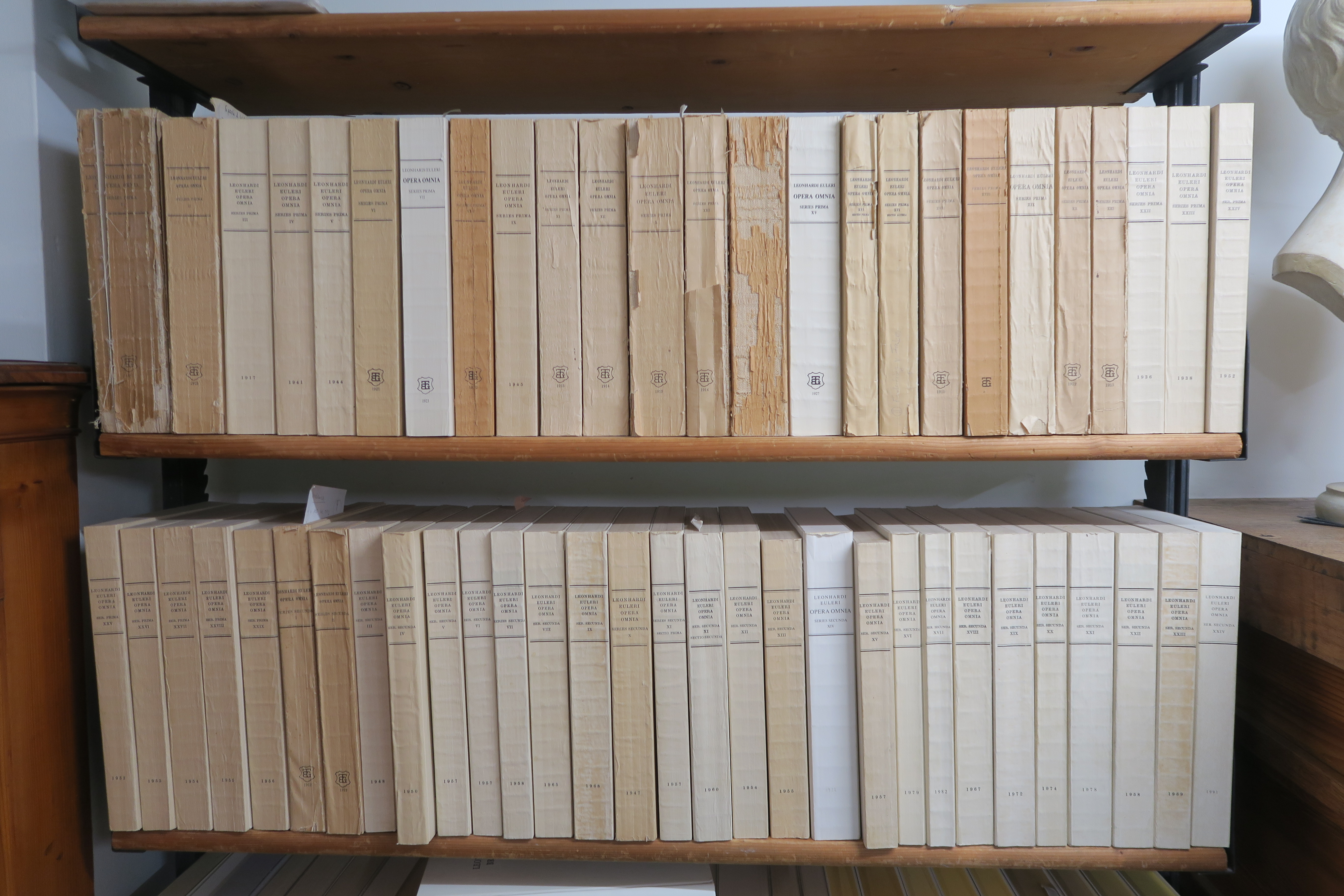
BEZ houses the compilation of Leonard Euler’s scientific writings, which is the outcome of a project ongoing for past one century by the Euler Committee, based in the Swiss Academy of Sciences — “Opera Omnia Leonhard Euler“. With its original publication date 1911, there are now 81 volumes of the collection, some of which are shown in the picture below
and at a tiny pebble’s throw distance from these collections is the bust of Euler

The most recent Leonhardi Euleri Opera omnia volume contains Euler’s communications with his closest friend Christian Goldbach, dating from 1729 to 1763 (pp. 99-580 in Opera Omnia – Part 1, Springer Basel 2015).
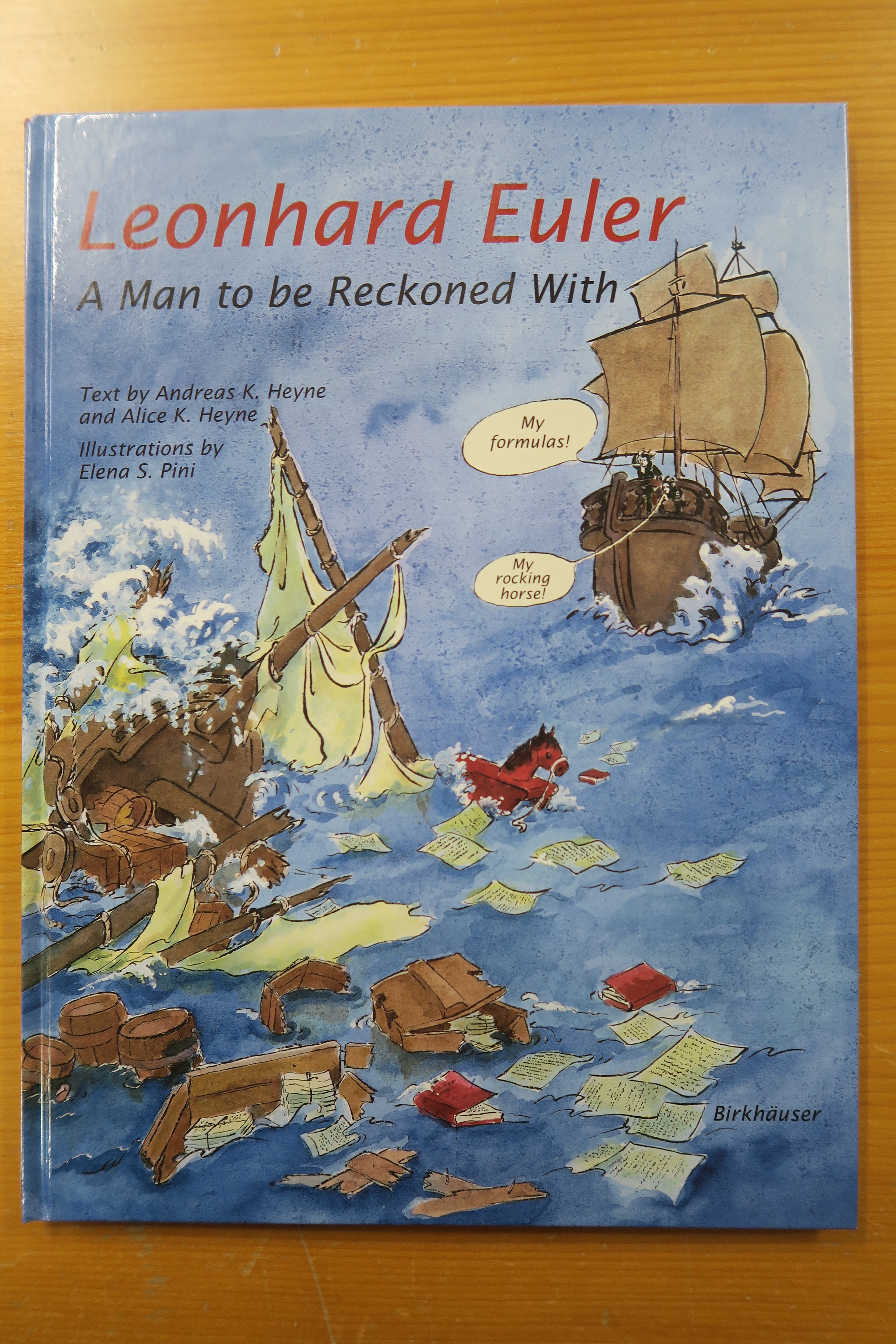
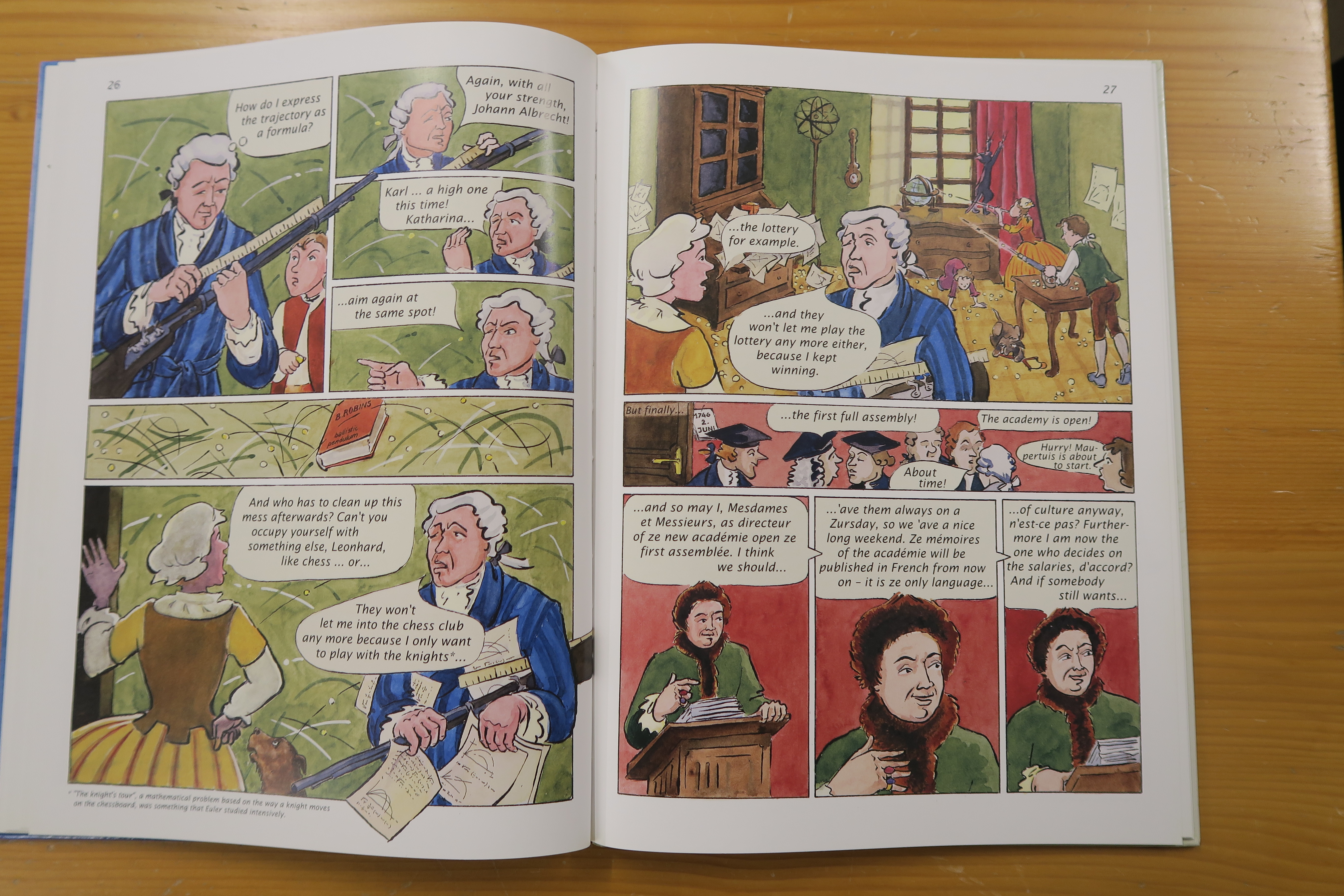
There are a few edited collections on Euler’s works, more suited for non-experts, such as: for children — Leonard Euler (A Man to be Reckoned With); review in AMS here.
or for mature mathematical audience, Leonard Euler by Emil A. Fellmann, here.
Globally speaking, there is another centre based in the University of the Pacific (Scholarly Commons services in its library) called The Euler Archive. This centre hosts an online repository and webpages of Euler’s works, which are copies of his original publications, from 1725 to 1783.
P.S. : Readers interested to know original locations and state of Euler’s works are kindly re-directed to this StackExchange thread; the originals are in the Archive of the Academy of Science, St. Petersburg, Russia and another one in Moscow.
 M A A
M A A 