COP28, organized under the convention of UNFCCC, was an exhilarating experience, since I attended this for the first time ever. Having graduated with a Ph.D., I value the importance and role that science plays in society, but sometimes, as scientists, we tend to not think beyond our scientific/academic circles. COP is the perfect example of how it is not just science, but other aspects such as, policy making, negotiations, diplomacy, stakeholders and their representations at various levels, and politics in general, that is crucial in implementing a decision, guided by science in the first place. In simple words, I learnt that science might come first, but it is politics that handles the rest.
My first day in COP28 was on Dec 2nd, when I met other delegates from UNAI Mexico for the first time. UNAI Mexico guided by the esteemed leadership of Mr Eduardo Sanchez Anaya is an amazing organization known for its water conservation efforts in Mexico. Our activities were coordinated by Benjamin Murguia, thanks to his efforts in keeping the entire team together throughout the busy and challenging days of COP. Other team members I have had the chance to meet are: Yesica Maria Dominguez Galicia, Vianey Plascencia, Cesar Iglesias, Bernardo Guevara, Martha Delgado, Rodrigo Aguilar, and many more.

The first panel discussion I attended on Dec 2nd was moderated by Champa Patel, the executive director for Government and Policy at Climate Group, and was on “understanding the powers and potential of state and regional governments”. The panel attendees were First Minister of Scotland, HE Humza Yousaf, Secretary for Natural Resources, California, US, Wade Crowfoot, Governor of Chungcheongnam-do, South Korea, Kim Tae-heum, Minister of the Environment for Climate Protection and Energy, Baden-Wurttemberg, Germany, Thekla Walker. One of the core issues discussed in this panel was how state and regional governments usually differ in their approaches to climate action because of differences in the priorities, commitments, agendas, and promises. While regional governments are directly in contact with the grassroot projects, state governments are sandwiched between the agendas set by central governments for them to achieve (with several bureaucratic and political constraints in between) and the demand by regional governments for funding, attention, and representation. The conclusion reached was setting a healthy balance between meeting the needs from representation at a lower level, while still preserving good relations with the parties above; especially, in the state of California where changing geopolitical waves for the past 10 years have caused changing policies and the allocation of funding.
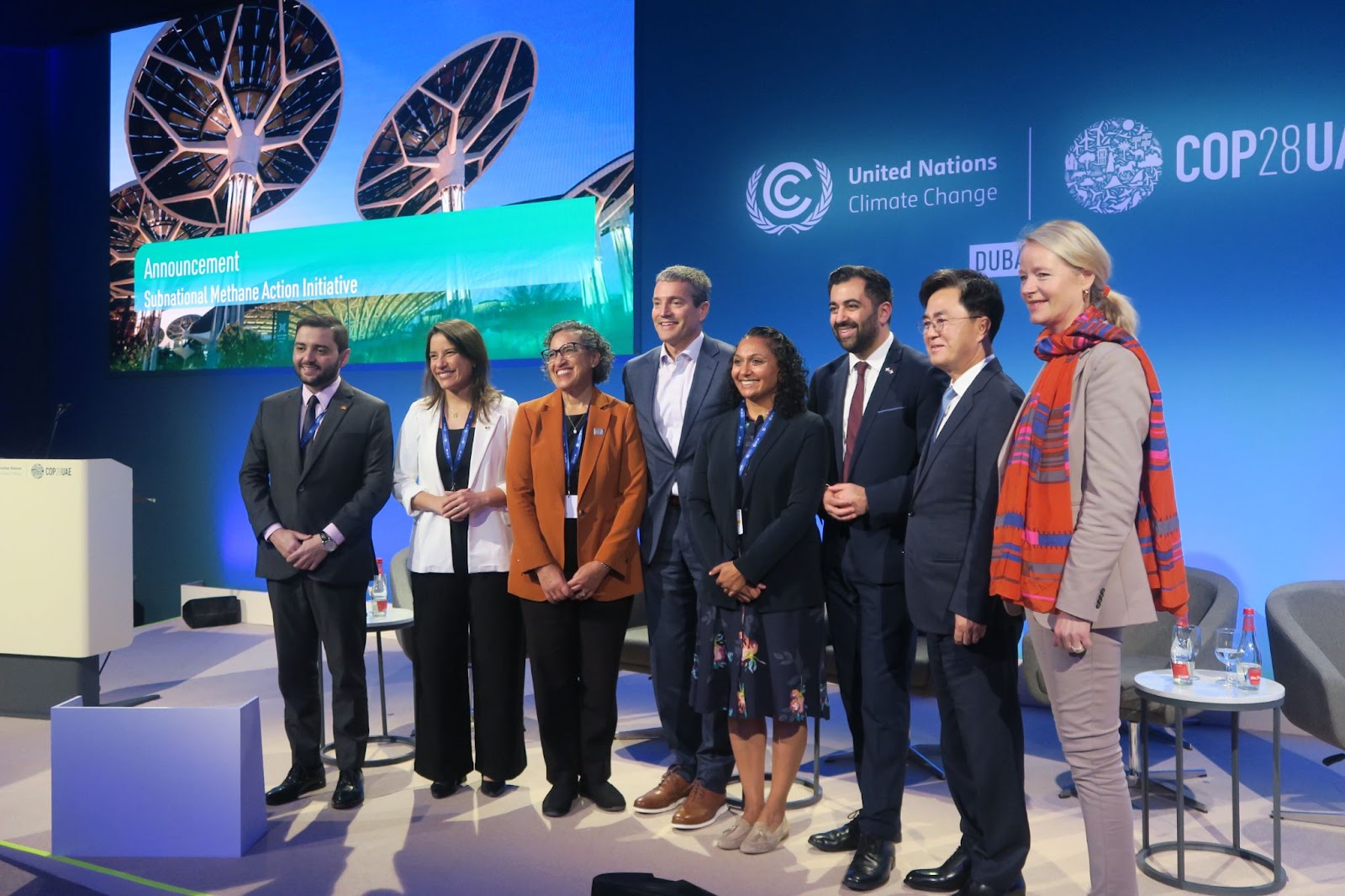
The second panel discussion I attended was moderated by Bill Ritter, Jr. Former Governor of Colorado, USA, titled “Finance fit for change: Co-designing multi-level mechanisms to unlock flaws of climate finance to subnational level”. The attendees of this panel meet were: Renato Casagrande (Governor of Espirito Santo, Brazil); Mauricio Kuri Gonzalez (Governor of Queretaro, Mexico), Lamin Saidykhan (Governor of North Bank region, Gambia), HE Anne Waiguru (Chairperson Council of Governors and Governor, County Government of Kirinyaga, Kenya). In this panel discussion, the issue raised in the previous one, on differences of priorities and agendas of parties at different levels was taken and looked particularly from the context of the flow of capital. A new mechanism of capital flow was proposed which operates at national and regional level, and designed by all the parties at different levels to sit together, and brainstorm ways to attract new ways of bringing climate action funding, such as through philanthropists, donors, sustainability budget of MNCs etc., and creating a net positive impact system.

A similar themed round chair discussion happened in parallel in another room, titled “Multi-level Climate Action Vision“ led by Raquel Lyra (Governor of Pernambuco, Brazil), Laurence Tubiana (CEO, European Climate Foundation (ECF)), and Anne Hidalgo (Mayor of Paris, France).

On the passing, Benjamin and myself had an opportunity to also meet the powerful, Brazilian indigeneous environmental activist Narubia Werreria whose powerful climate speeches has made her an emerging, famous activist from the South American region.
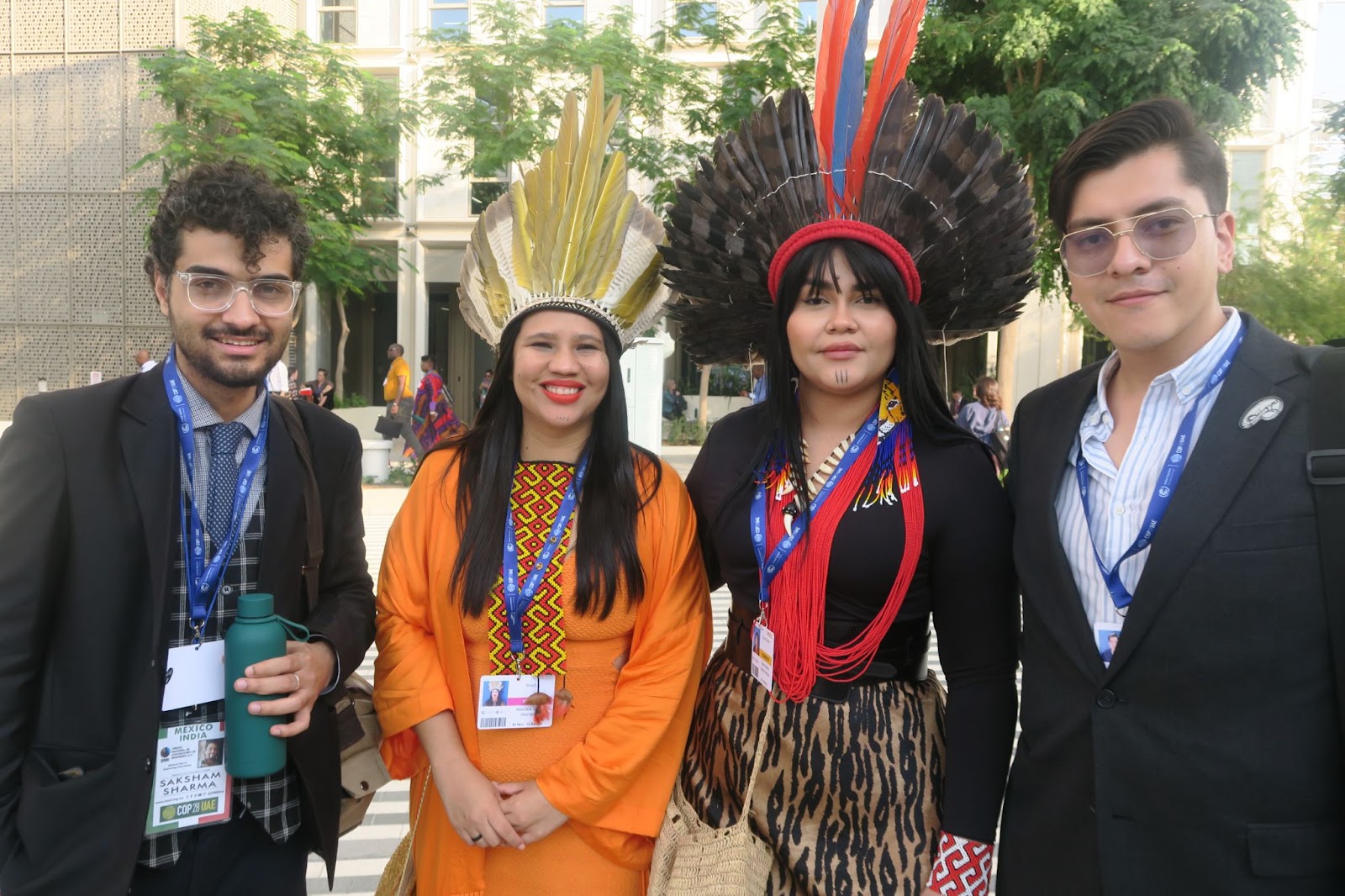
This was followed by the meeting of UNAI delegates with Martha Delgado Peralta, Undersecretary for Multilateral Affairs and Human Rights at the Mexican Ministry of Foreign Affairs, at the lounge of Hotel Rove.

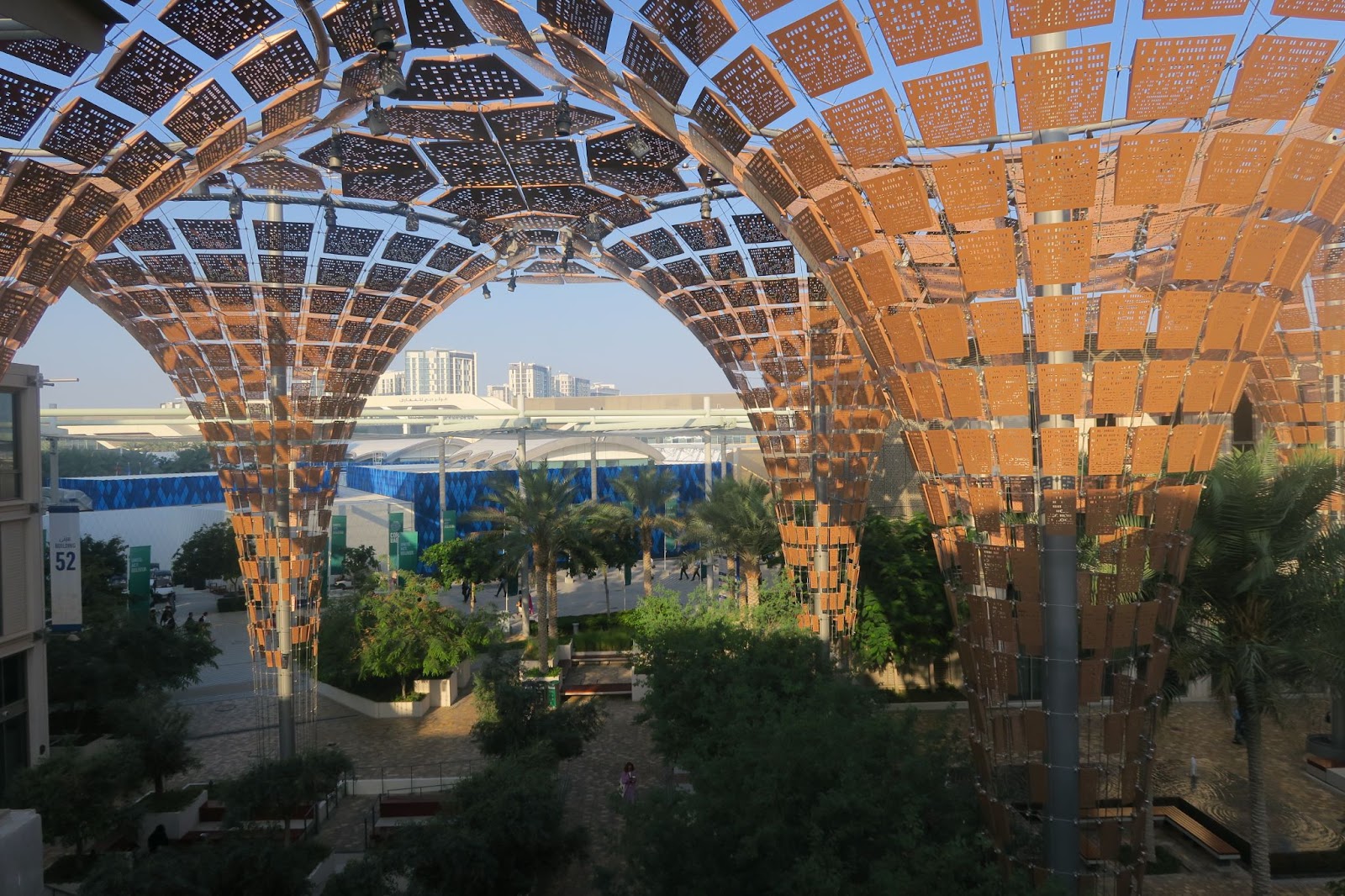
The evening of Dec 3rd finished with slowly getting in tune with the political, social, and cultural atmosphere set in by nearly 70,000 attendees at the COP, distributed unevenly in the vast 438 acres landsite of Expo 2020, and lit beautifully in the evenings with lights, under the tall hyperbolic domes in the blue zone, near country pavilions, shown below.
The next morning of Dec 3rd opened up in an exuberant and joyful mood by the Indonesian party delegates and observers dancing to the song “Gemu Fa Mi Re”, wearing an indigeneous headgear.

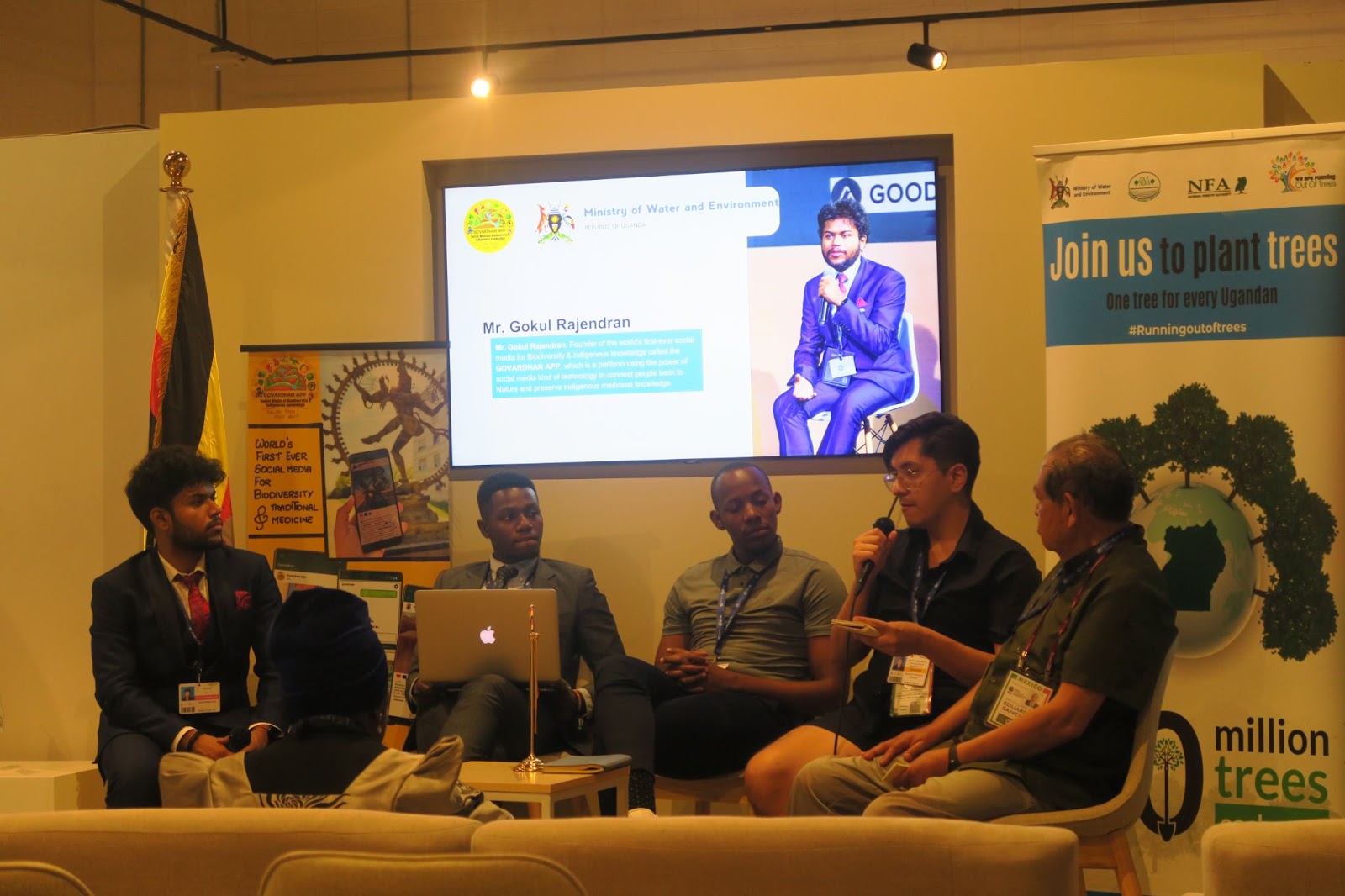
UNAI started the day with a panel discussion hosted by the Ministry of Water and Environment, Republic of Uganda, and moderated by Mr. Gokul Rajendran, who is the founder of a social media app for biodiversity and indigenous knowledge. One of the highlights of this panel discussion was the use of traditional and sustainable medicines in alleviating some local diseases, and the strategies involved in convincing the local and national regulatory bodies about the effectiveness of such medicines.
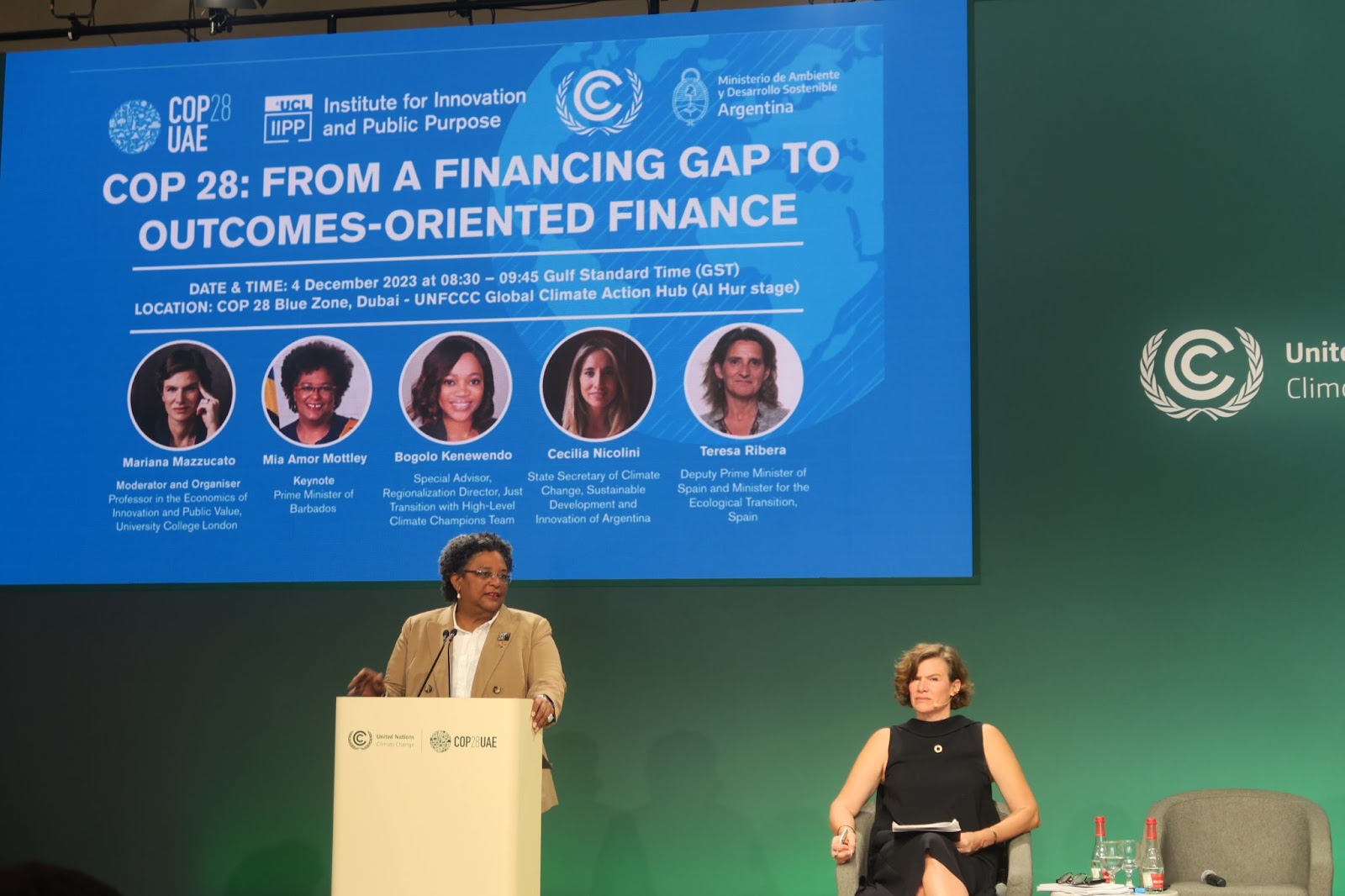
This was followed by a panel discussion titled “From a Financing Gap to Outcomes-Oriented Finance” moderated and organised by Mariana Mazzucato (Professor in Economics, UCL) and attended by: Mia Amor Mottley (Prime Minister of Barbados); Bogolo Kenewendo (Special Advisor, Just Transition with High-Level Climate Champions Team); Cecilia Nicolini (State Secretary of Climate Change, Argentina), Teresa Ribera (Minister of Ecological Transition, Spain). One of the key highlight of this panel discussion was the role that High Ambition Coalition (HAC is playing in pitching for the “full phase out” of fossil fuels (FFPO) in this COP. HAC already has got more than 100 countries signed up for the FFPO, especially the EU nations and small island countries.
The heavy-headed panel discussion was followed by a relaxing retreat at the Turkish pavilion where the Turkish Ebru art was being displayed. This art technique is based on using oil paints and dipping paint brush in them and then sprinkling onto the water-mixed-with-surfactant surface to create immersive and psychedelic multi-coloured patterns. These patterns are then absorbed to the blank canvas to imprint the paint upon them, with the final result being a painting created as a result of interaction between human and water.

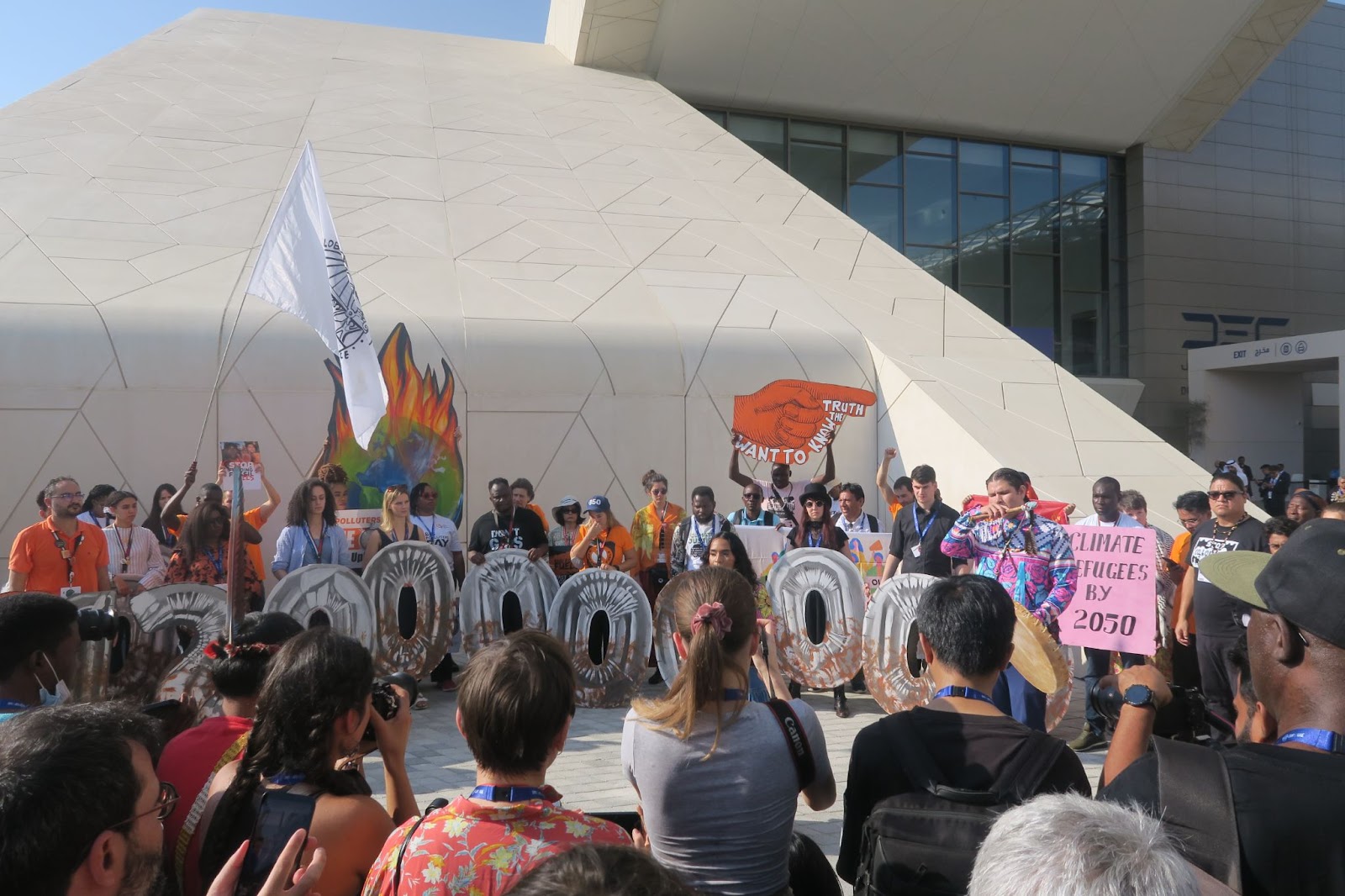
As the tension arose on the use of language in the global stocktake, particularly the use of the word “phase out” and in which context, activists started coming out for the first in this COP, towards the end of Dec 4th. One picture of a group of activists, showcasing the concerns and demands by climate refugees, is shown below. One of the slogans used was “Kick Big Polluters Out”, when it came to the realization that there were around 3000 oil lobbyists out there in the COP.
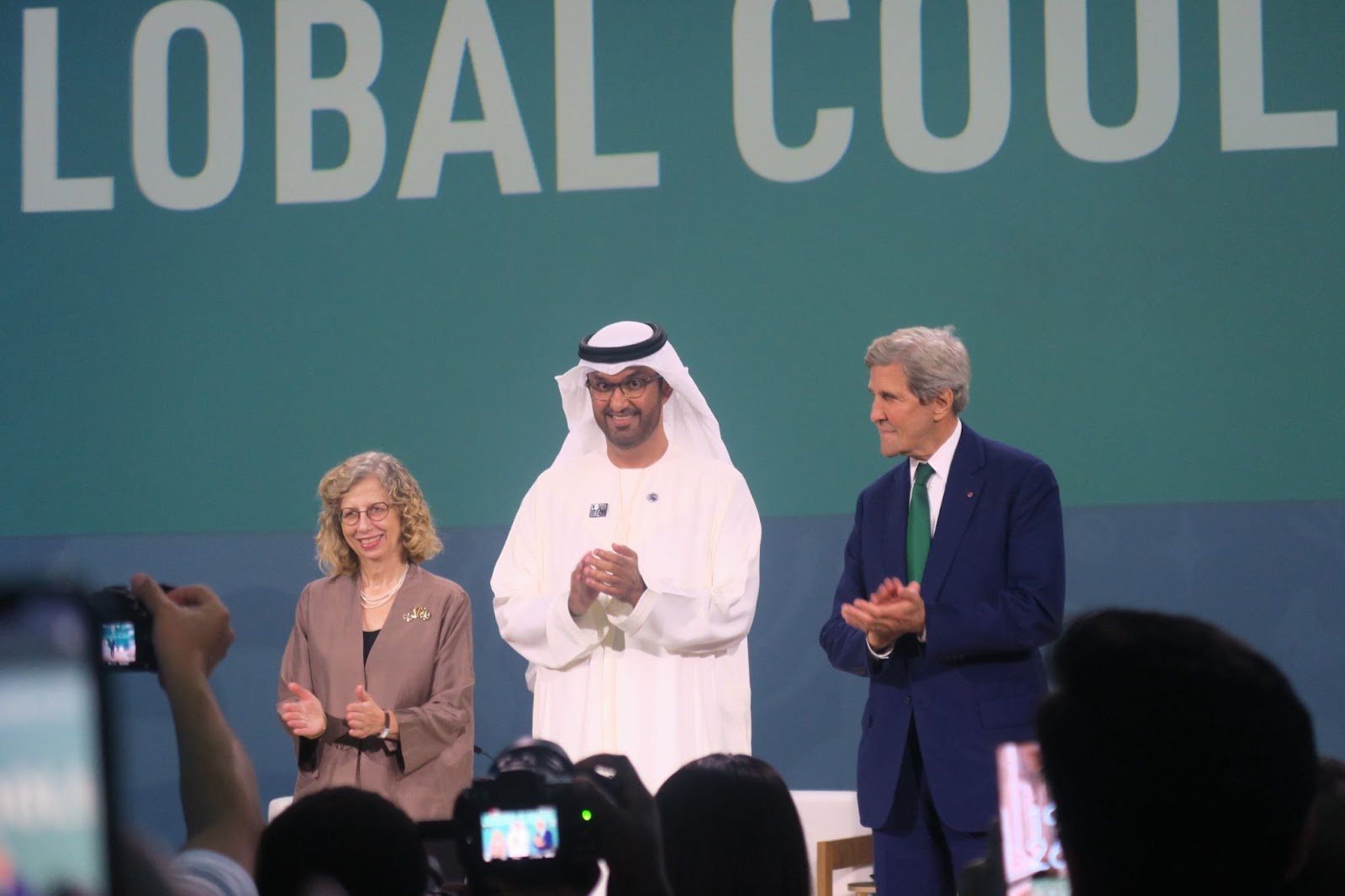
The next day started with serious initiatives on the launch of the Global Cooling Pledge, introduced by John Kerry, US Climate Envoy to COP, COP President Sultan Al Jaber, and UNEP Executive Director Inger Andersen.
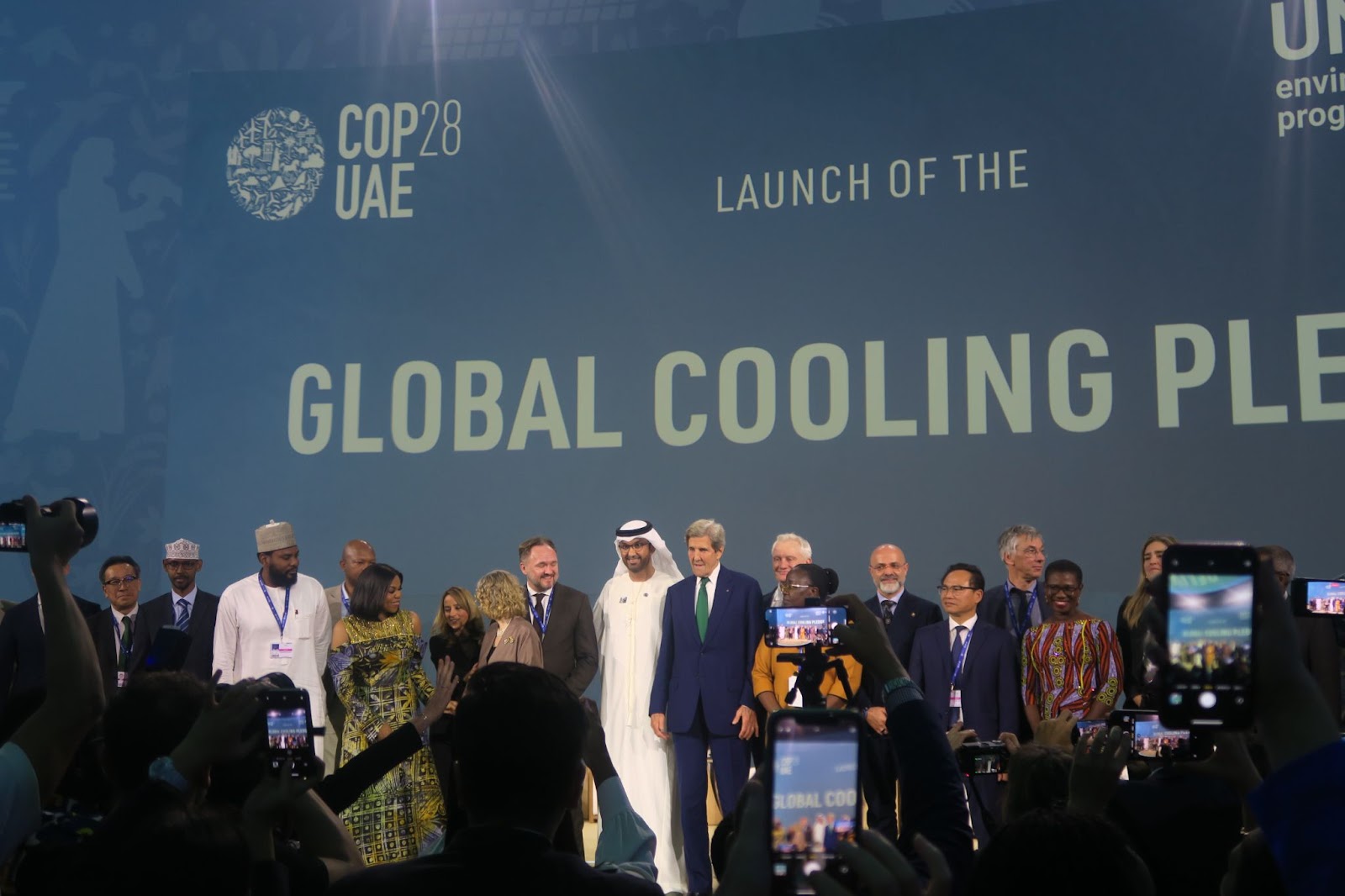
They were later joined by friends, members of coalitions, and staff working to frame the pledge. In nutshell, the pledge, though non-binding, aims to achieve production and circulation of high-quality coolants, refrigerants, and cooling equipments as the demand of them becomes inevitable with global average temperature rising in coming decades because of climate change.
UNAI Mexico also responded to the growing tensions and emotions pertaining the language of fossil fuel phaseout by attending a media discussion with a media outlet based in Mexico. One picture from the interview session is below, and the video is here.

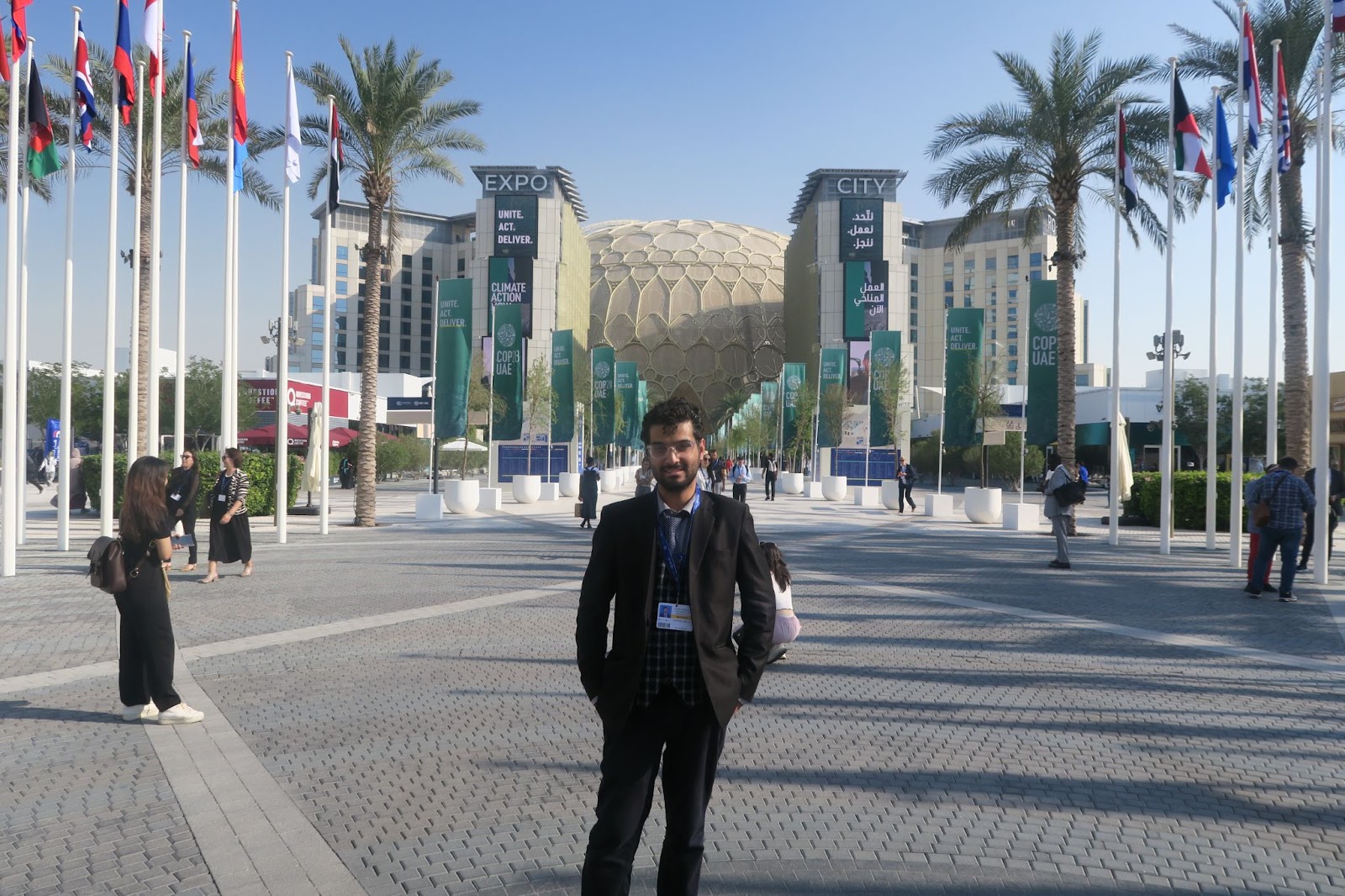
Amidst other activities organized by activists, artists, NGOs, and other stakeholders, the first half of COP28 was finished, with a photograph of myself in the venue shown below.
COP28 turned out to be a great learning experience for me, with plenty of issues related to coral reef bleaching discussed at various levels, the mitigation strategies employed by the parties to the best of their abilities and power, and how a collaborative and fighting-for-the-common-cause spirit can help us protect our mother Earth from heating up too much, and thereby, protecting the endangered humans, animals, and the biodiversity, as we head towards a potential disaster that we have to prevent at any form possible.
P.S.: Video and stills from COP
 M A A
M A A 
One thought on “COP28, Dubai”